


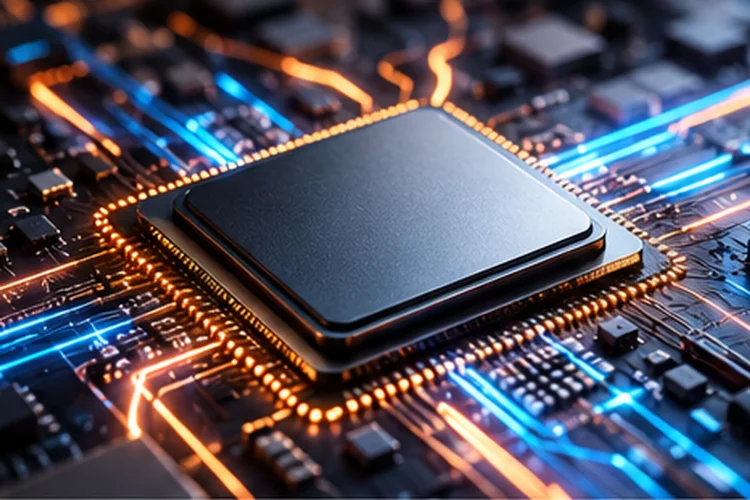
Smartphone processors are no longer just about CPUs and GPUs. Open the specification sheet of a modern flagship chipset and you will probably find another increasingly important component: the neural processing unit, or NPU.
A few years ago, dedicated AI hardware might have sounded like a specialized feature. Today, smartphones constantly use machine learning for photography, speech recognition, noise removal, translation, image enhancement, security features, and generative AI.
Running all of those workloads on conventional CPU cores would often be inefficient.
GPUs can accelerate many parallel calculations, but they are also designed to handle graphics and broader compute workloads. An NPU is different because it is specifically optimized for neural-network inference.
That specialization explains why neural processing units matter in modern mobile chipsets. They allow increasingly sophisticated AI tasks to run quickly while staying within the strict battery and thermal limits of a smartphone.
As mobile AI grows more advanced, the NPU is becoming as important to the overall chipset design as raw CPU and GPU performance.
What Is a Neural Processing Unit?
A neural processing unit is specialized hardware designed to accelerate operations commonly used by machine-learning models.
Neural networks depend heavily on mathematical operations involving matrices, vectors, tensors, and repeated multiply-accumulate calculations. CPUs can perform these operations, but general-purpose processors are designed to handle many different types of instructions.
An NPU dedicates much more of its hardware to AI-related workloads.
Arm describes NPUs as processors designed to improve neural-network inference performance. Qualcomm’s Hexagon NPU similarly includes specialized processing capabilities specifically designed for AI inference.
Think of the difference like using a multi-purpose kitchen knife versus a specialized food processor. Both can accomplish some of the same jobs, but one is optimized to complete specific repetitive tasks much more efficiently.
That efficiency is particularly valuable inside smartphones, where every watt matters.
NPUs Make On-Device AI Practical
Many AI features were historically handled in the cloud.
Your phone would send information to a remote server, the server would run the model, and the result would return over the internet.
Modern NPUs allow more of that work to happen locally.
Qualcomm describes its AI Engine as a heterogeneous system combining its Hexagon NPU with CPU, GPU, and sensing hardware to accelerate on-device AI applications. The NPU is specifically designed to provide high AI inference performance while maintaining power efficiency.
This enables tasks such as text generation, image understanding, speech processing, and smart assistants to operate directly on supported devices.
Arm is also designing newer mobile platforms around this trend. Its current mobile architecture focuses on responsive on-device AI, including increasingly demanding generative and agentic workloads, while remaining inside smartphone power and thermal limits.
Without specialized acceleration, running these models locally would place far greater pressure on the CPU, battery, and cooling system.
Computational Photography Depends Heavily on AI
Modern smartphone photography is essentially a combination of optics and computation.
Press the shutter button and the phone may capture several frames, analyze faces, identify objects, combine exposures, reduce noise, sharpen details, adjust colors, and intelligently separate subjects from backgrounds.
Machine learning increasingly influences many of these processes.
An NPU can rapidly execute models used for scene recognition, semantic segmentation, facial processing, depth estimation, image enhancement, and other computational photography techniques.
The benefit is not simply better-looking photos.
Specialized AI processing can perform these operations with less dependence on the main CPU and GPU, leaving those processors available for other work.
This becomes especially important during video capture. Processing AI-enhanced video continuously can involve millions or billions of operations every second, and the workload must remain stable without making the phone excessively hot.
The ability to distribute these jobs across specialized engines is one reason modern system-on-chip designs increasingly use heterogeneous computing instead of expecting one processor to handle everything.
Voice, Translation, and Audio Processing Benefit Too
Photography may be highly visible, but many everyday AI features happen quietly in the background.
Voice recognition is a good example.
A smartphone can use machine learning to recognize speech, distinguish voices from background noise, generate captions, improve call quality, or translate conversations.
Some of these tasks must happen almost instantly.
Sending every piece of audio to a cloud server could introduce network latency and require constant connectivity. On-device processing can reduce that delay while potentially keeping more sensitive information local.
Qualcomm emphasizes this privacy benefit in its Hexagon architecture, noting that on-device AI can personalize experiences while helping keep data on the device.
Local processing also makes AI functions more reliable in environments with weak connectivity.
A transcription or noise-suppression feature is much more useful when it continues operating inside an airplane, underground station, or poorly connected rural area.
The NPU helps make that possible without forcing the CPU to run intensive neural-network calculations continuously.
Power Efficiency May Matter More Than Raw AI Speed
AI performance is often advertised using metrics such as TOPS, meaning trillions of operations per second.
That number can be useful, but it does not tell the entire story.
A smartphone cannot simply consume unlimited power to maximize AI performance. Doing so would rapidly drain the battery and generate enough heat to trigger thermal throttling.
Performance per watt is therefore critical.
An NPU is valuable because its hardware is optimized for neural-network operations. Performing the same AI workload on a more general processor may require more instructions and potentially more energy.
Qualcomm specifically positions its Hexagon NPU around both inference performance and energy efficiency rather than raw compute alone.
Arm follows the same broader philosophy with its latest mobile compute platforms, emphasizing sustained AI performance within mobile thermal constraints.
This explains why the “fastest” AI processor on paper is not always the most useful one.
A slightly slower NPU that can sustain workloads efficiently may provide a better smartphone experience than a chip that delivers impressive short bursts before becoming thermally limited.
Generative AI Is Making NPUs Even More Important
Traditional smartphone AI models were often relatively small.
They detected faces, classified scenes, recognized speech, or enhanced photographs.
Generative AI changes the workload significantly.
Modern smartphones increasingly run language models capable of summarizing text, generating responses, understanding images, and assisting users across multiple applications.
These models require far more computation and memory.
Qualcomm’s latest Hexagon NPU architecture reflects that change. The company introduced transformer-focused acceleration along with a 50% larger shared NPU memory subsystem intended to keep more model data close to the processor and reduce expensive trips to external memory.
The architecture also supports a range of numerical precisions, including low-precision formats useful for reducing AI model size and computational requirements.
This is important because smartphones cannot run data-center-scale models unchanged.
Models need to become smaller, more memory-efficient, and easier to execute within limited battery and thermal budgets.
The NPU is one of the key pieces that makes that compromise possible.
NPUs Work With CPUs and GPUs Rather Than Replacing Them
An NPU is not designed to replace the CPU or GPU.
Modern mobile chipsets increasingly rely on heterogeneous computing, where different processors handle the workloads they are best suited for.
The CPU remains excellent at general-purpose application logic and sequential tasks. The GPU handles graphics and highly parallel workloads. The NPU specializes in neural-network inference.
Qualcomm’s AI Engine explicitly combines these processors instead of treating the NPU as an isolated system.
Arm’s mobile platforms follow a similar system-level approach, combining CPUs, GPUs, system interconnects, software, and neural acceleration into one coordinated compute architecture.
Consider an AI photo-editing application.
The CPU might handle application logic and file management. The NPU could identify objects and create segmentation masks. The GPU might render the edited result and effects.
Using the right engine for each task reduces unecessary processing and can improve both responsiveness and battery life.
Memory Bandwidth Is Becoming Part of NPU Performance
AI processors need more than mathematical throughput.
They also need data.
Model parameters, intermediate tensors, activations, input information, and output results constantly move between memory and processing units.
If the NPU performs calculations faster than the memory subsystem can deliver data, performance can become memory-bound.
Qualcomm’s newest Hexagon design directly addresses this problem through additional shared memory intended to keep frequently accessed AI data near the NPU. The company says this reduces memory bottlenecks for longer-context and concurrent AI workloads.
Arm’s recent mobile architecture messaging makes a similar point: future AI performance depends not only on individual compute engines but also on how efficiently information moves between them.
This means future chipset comparisons will need to consider more than NPU TOPS.
Memory bandwidth, cache design, supported data formats, software optimization, and model efficiency can all affect actual AI performance.
NPUs Can Improve Privacy as Well as Performance
Keeping AI inference on the smartphone provides another major advantage: less data may need to leave the device.
That can be valuable for applications involving private photos, messages, voice recordings, personal documents, or contextual information.
Qualcomm specifically highlights the ability of Hexagon-powered smartphone platforms to personalize experiences while keeping data on-device.
Local processing does not automatically guarantee privacy, of course.
An application can still collect or upload information even when its AI model runs locally. Strong security, permissions, storage protection, and responsible software policies remain necessary.
But local inference removes one potential requirement to send sensitive information across the network simply to perform an AI calculation.
This becomes increasingly important as AI assistants gain deeper access to personal context.
A future assistant that can understand messages, applications, images, and ongoing activities becomes much more attractive if much of that processing can happen privately on the device.
AI Hardware Is Spreading Beyond the Traditional NPU
Interestingly, neural acceleration is no longer limited to one dedicated block.
Apple’s 2026 A19 platform, for example, combines an upgraded 16-core Neural Engine with Neural Accelerators integrated into its GPU architecture, allowing different hardware engines to contribute to Apple Intelligence and other AI workloads.
Arm is taking another approach with neural acceleration inside graphics hardware. Its newer Mali G2-Ultra NX includes dedicated neural accelerators designed partly to support AI-enhanced graphics and reduce conventional GPU workloads.
This suggests the future of mobile AI may not revolve around one isolated NPU.
Instead, AI acceleration could spread throughout the entire SoC.
Dedicated NPUs will remain important for efficient inference, while CPUs gain matrix extensions and GPUs incorporate neural engines for graphics-related tasks.
The smartphone processor is gradually becoming an AI-native computing system.
Neural processing units matter because smartphones are being asked to run far more AI without sacrificing responsiveness, battery life, privacy, or thermal stability.
NPUs accelerate machine-learning inference, helping with computational photography, speech processing, translation, generative AI, and increasingly sophisticated assistants.
Their specialization allows these workloads to run more effeciently than relying entirely on conventional CPU processing.
But NPU performance should never be judged by TOPS alone. Memory bandwidth, model optimization, numerical precision, software support, sustained efficiency, and cooperation with the CPU and GPU all influence real-world results.
When comparing future smartphones, look beyond CPU clocks and graphics benchmarks. Pay attention to how the chipset handles AI as an entire system.
As AI moves deeper into everyday mobile experiences, the NPU – or whatever specialized neural hardware replaces it – will become one of the most important processors inside your phone.
